
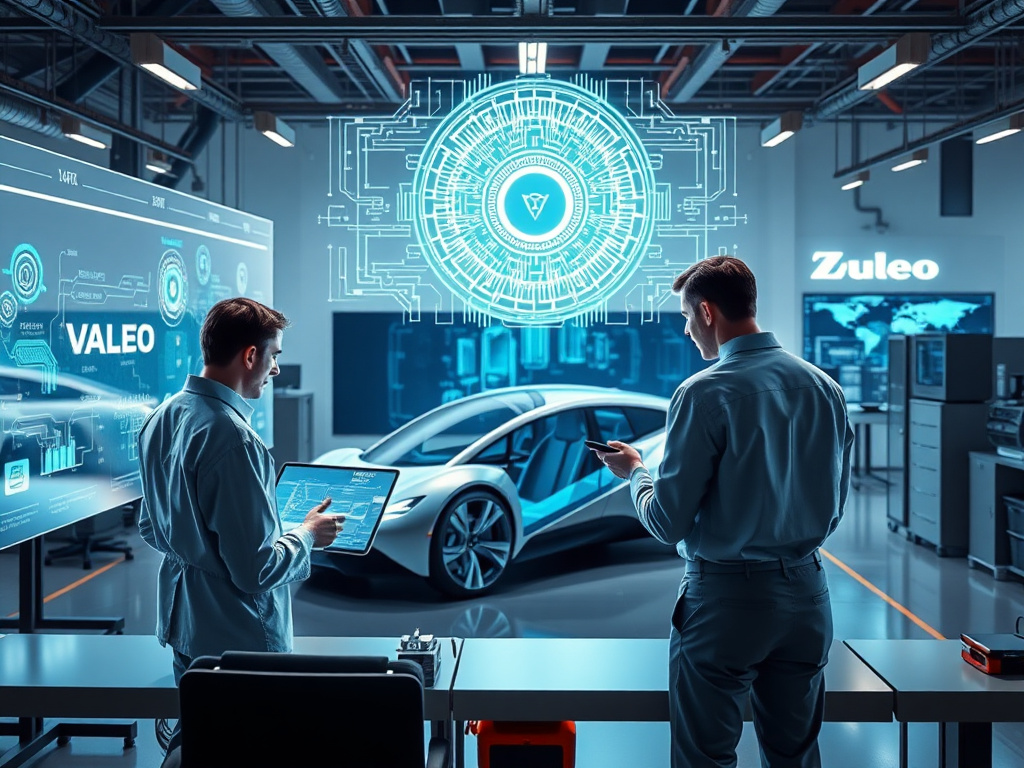
Valeo and Zuken Launch AI‑Assisted EDA InnoLab
The French automotive supplier Valeo and Japanese EDA specialist Zuken announced the creation of the “Zuken Valeo InnoLab,” a joint programme aimed at delivering an open, AI‑enhanced electronic design automation (EDA) platform for the automotive sector. By integrating Valeo’s proprietary “AI Agents” with Zuken’s System Planner, Design Force engine and software development kit, the collaboration seeks to shorten electronic architecture cycles, improve first‑time‑right success rates, and ensure compliance with the latest Automotive SPICE 4.0 standards. The initiative targets four key technology pillars: generative design of multi‑criteria circuit layouts, seamless digital continuity across the development chain, AI‑driven schematic entry and rule verification, and fully automated placement‑and‑routing powered by Zuken’s Design Force.
Both companies stress that the platform is built on an “open” and collaborative model, allowing external partners and suppliers to plug into the ecosystem without vendor lock‑in. Valeo’s Christophe Le Ligné highlighted that Zuken is more than a software vendor, describing the partnership as a true innovation alliance that leverages Valeo’s deep automotive electronics expertise. In parallel, Zuken’s Ryosuke Takagi linked the project to the firm’s “Autonomous Brain” roadmap, positioning the InnoLab as a cornerstone for future autonomous‑driving and electrified‑vehicle electronics where rapid iteration and robust verification are critical. Early pilot projects have reportedly reduced design turnaround by up to 30 % while maintaining rigorous safety and functional‑safety checks.
Industry observers see the Valeo‑Zuken collaboration as a significant step toward democratizing advanced EDA tools that were previously confined to large OEMs. By offering AI‑assisted generative capabilities, the platform can automatically explore a vast design space, evaluate trade‑offs such as cost, weight, and thermal performance, and suggest optimal solutions that meet stringent automotive regulations. Moreover, the integration of AI agents for rule verification promises to catch design errors early, lowering the risk of costly rework in later stages. As vehicle electrification and autonomous functions continue to drive electronic complexity, the InnoLab aims to provide a scalable, future‑proof foundation that accelerates innovation while safeguarding reliability.
